Sleep article

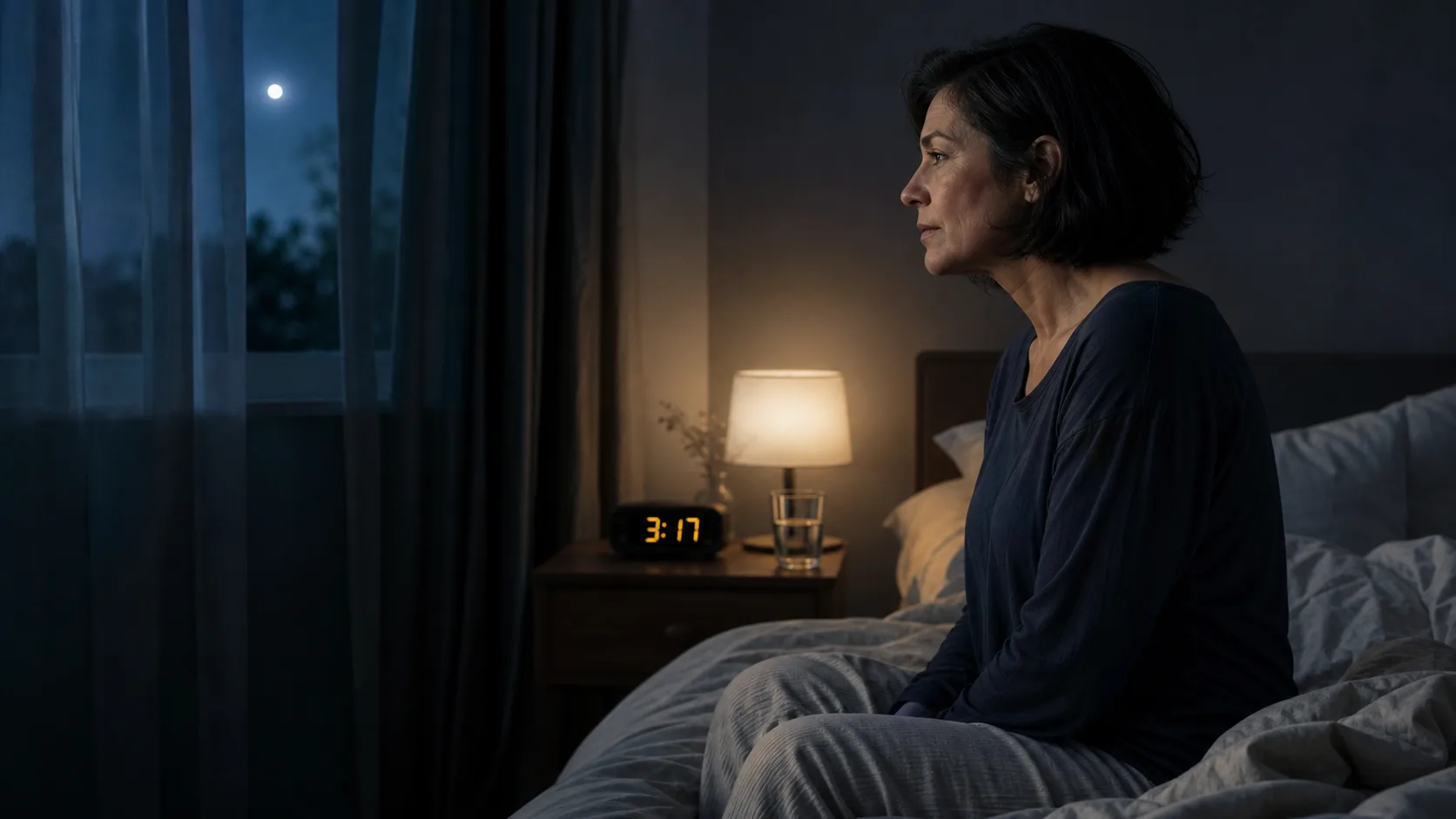
Why do I feel more anxious at night in midlife?

Night can amplify fear because the day finally goes quiet enough for everything unresolved to feel louder. When sleep has also become fragile, that anxiety can feel even more personal and destabilizing.
Search-intent article Published Jun 1, 2026 By Second Spring Intelligence Educational read
Q

Late-night question, calmer answer

Written for the way nighttime fear actually feels.

P

Pattern before panic

Notice load, anticipation, and fragility before dramatic conclusions.

E

Education only

No self-diagnosis theater.

N

Sleep first

A practical bridge if anxiety keeps attaching itself to sleep.

Why this read exists

This read should make the question, the signal, and the boundary easier to see.

It starts with a repeated question

These reads earn their place by answering questions women are already asking in search, after rough nights, or inside the member room.

It uses edited signal

Research, repeated patterns, and practical relevance are filtered before anything becomes guidance.

It keeps uncertainty visible

A strong read names useful clues without pretending one page can prove one universal explanation.

It leaves one next move

The goal is calmer orientation and one proportionate next step, not another spiral of tactics.

What this read can and cannot do

A trustworthy read lowers confusion without acting bigger than it is.

This read can

  • Name the real repeated question clearly
  • Show which clues deserve attention first
  • Lower noise before more tactics are added
  • Point to one calmer next step

This read cannot

  • Diagnose the pattern
  • Prove one universal explanation
  • Replace personalized care
  • Solve the whole chapter in one page

Why it can happen

Start with the pattern before judging yourself.

Accumulated stress load

A day that never really resolves can show up as nighttime scanning and emotional tension.

Sleep anticipation

If nights have become unreliable, bedtime itself can start to feel charged.

Midlife vulnerability

Body changes, lower resilience, and a sense of unfamiliarity can make nighttime fear feel more intense.

What to notice first

A calmer pattern check beats an anxious self-diagnosis.

Notice

  • Whether anxiety rises most on already-depleting days
  • Whether fear starts before bed or after waking
  • How much the next-day recovery gap is shaping the pattern
  • What routines seem to reduce the sense of nighttime pressure

Avoid

  • Assuming the night feeling tells the whole truth
  • Treating every rough night like proof something is deeply wrong
  • Chasing dramatic explanations before you understand the pattern
  • Confusing vigilance with useful problem-solving

Use this article well

A steadier way to use this read on an anxious night.

1. Notice whether fear starts before bed or after waking

That difference often changes how the pattern should be understood.

2. Look at what kind of day came before it

Already-depleting days often make the night feel louder and thinner.

3. Separate emotional intensity from final truth

A frightening night feeling is real, but it is not always the whole explanation.

4. Start with sleep if it keeps attaching itself to sleep

The guide and issues help lower confusion before you widen the picture.

Next step

If nighttime anxiety keeps attaching itself to sleep, start with sleep first.

The free sleep guide and the first two Weekly Intelligence issues can help lower confusion before you decide which deeper codex or membership step is actually relevant.